Why Recent Cyber Attacks in France Are a Wake-Up Call for Every Business
Every business is under siege as France has experienced a series of high-impact incidents that have made headlines well beyond the security community:
- The national postal service is disrupted during peak season.
- The email servers of a government ministry were breached.
- A major retailer faced a customer data breach.
- A municipality was forced to go into “paper mode” after an attack.
These incidents stress the urgent need to reevaluate cybersecurity strategies across organizations. And if cracks exist, attackers don’t need magic, just time and one fair chance to pull the trigger.
For IT leaders and Microsoft 365 admins, these French cyberattacks can serve as useful case studies. It’s not that we’re looking for a forensic deep-dive, which is really the job of the incident responders, but these incidents highlight the same critical business failures: email exposure, poor identity management, limited visibility, and slow recovery times.
Cyber Attacks in France Are No Longer Isolated Incidents
Looking at each occurrence in isolation, it may seem like a series of unfortunate events. Put together, they read like a pattern: public bodies and big brands are being tested continuously, often by actors who want disruption as much as (or more than) data. That’s the real shift behind numerous French cyber-attacks: frequency plus variety, not one dramatic outlier.
This is why cybersecurity news matters for governance. The attacker’s goal is usually a measurable business impact, such as:
- downtime
- confusion
- reputational damage
- regulatory pressure
- and follow-on fraud
In other words, they try to turn security problems into operational problems.
A Snapshot of Recent Cyber Attacks in France
The attacks below are not random. They target services people rely on every day, and they exploit common organizational weaknesses.
La Poste cyberattack (service disruption)
On 22–23 December 2025, France’s national postal service, La Poste, suffered a distributed denial-of-service (DDoS) attack that knocked down its central systems. Parcel tracking and other online services became inaccessible, and La Banque Postale warned customers about disruption to online and mobile banking.
Even when a DDoS attack doesn’t steal data, it still creates “blast waves”: disrupted payments, slowed deliveries, and a prime opportunity for copycat scams (“re-delivery fee” phishing messages, fake support calls, and brand impersonation).
Cybersecurity Report 2026
The AI-Driven Acceleration of Global Threats
French Interior Ministry email server breach (sensitive files)
During December 2025, France’s Interior Ministry disclosed that its email servers had been maliciously infiltrated.
Investigators reported unauthorized access to a limited number of professional email accounts and the viewing of dozens of confidential documents related to police records and wanted-persons files.
It’s not just about losing files because a security breach in a critical ministry can erode trust, draw attention to governance lapses, and prompt immediate defensive measures, all while standard operations must go on.
Auchan’s breach puts customer data in jeopardy
In the second half of August 2025, renowned Retailer Auchan confirmed that unauthorized access to personal data from customer loyalty accounts had occurred.
Public reporting states that the exposed data included names, email addresses, postal addresses, phone numbers, loyalty card numbers, and professional status. Auchan stated that banking information, passwords, and PINs were not affected.
This is the point where attackers play the long game. Following a retail data breach, they launch months of targeted phishing and fraud attempts, since the stolen information makes their approaches more believable and harder for customers to recognize.
Municipal-level attack: Saint-Nazaire (long recovery)
In April 2024, Saint-Nazaire and its agglomeration reported a large-scale cyberattack involving a “crypto-virus.” As the official reports say, there were noteworthy disruptions to email, internal servers, file sharing, business apps, and phone services.
That said, the team reverted to basic operations, relying on paper processes and unaffected phone lines while specialists worked on the investigation and recovery efforts. The burden on municipalities is notably uneven as smaller teams are tasked with delivering services and rebuilding systems simultaneously.
This results in costs that include extra overtime, outside support, delayed public services, and a sluggish recovery of public trust.
What These Attacks Have in Common
Email as a primary entry point
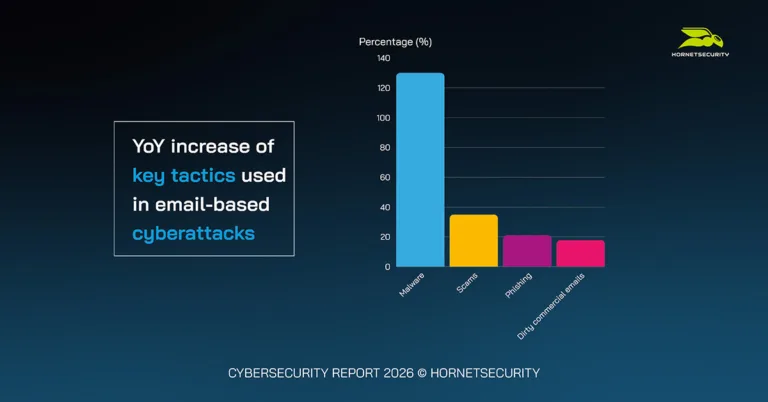
Reaching out via email is still the most straightforward way to contact individuals and verify their identities. In the ministry breach incident, the email accounts were compromised. After retail exposure, email becomes the attacker’s favorite channel for follow-on scams. And when the municipal email goes down, coordination falls apart immediately. Without a plan in place, the fallout can be catastrophic for community operations.
Identity and access weaknesses
A mailbox with weak authentication is what every hacker desires. Poor MFA coverage, credential reuse, and over-privileged accounts can turn a small compromise into a large incident. Even though fixing a worn-out lock might not be the most thrilling job, it can quickly change the dynamics for an attacker. Investing in stronger security measures is a necessity we can’t afford to overlook.
Limited visibility into active threats
When defenders can’t see unusual sign-ins, mailbox rules, risky OAuth apps, or abnormal file access, attackers get time. Time is what you should really watch for in incidents; it’s the currency that enables attackers to access data, move around, and ultimately deploy ransomware.
Delayed detection and response
Many incidents show that attackers often have several days to operate before containment measures are implemented. This delay in detection can lead to extensive cleanup efforts, extended downtime, and considerable reputational damage. Hence, business leaders need to prioritize prompt threat detection to protect their sensitive information.
Significant operational and reputational damage
Reputational damage leads to significant change. You can feel the tension in the air, thick and suffocating, as parcel deliveries come to a halt, and municipal services disappear. A public data breach severely impacts a company’s reputation, especially since customers expect transparency and long-term security.
The Vulnerability of Public and Critical Services as Prime Targets
With their symbolic importance and reliance on digital operations, public institutions in France are vulnerable to cyberattacks that can create headlines, ultimately benefiting disruptive entities. There’s also a rush to restore operations quickly, which often leads to shortcuts being taken. By adding a geopolitical context, such as the pro-Russian hacktivist claims surrounding La Poste, incidents arise that affect operations and signal political intentions.
How The Human Factor Still Plays a Central Role
True that, phishing and social engineering still work because humans are busy. Attackers exploit:
- urgency (“approve this now”);
- trust (“I’m your colleague”);
- uncertainty (“your parcel is stuck”).
After important events, inboxes often fill up with messages that make it hard to tell what’s real and what’s not. This confusion can lead people to click on messages without thinking.
This is why a single training session isn’t sufficient. Continuous awareness through realistic simulations, brief lessons, and feedback is more crucial than ever. The aim isn’t to embarrass users, but to encourage them to take a moment and think before they act. Training security awareness is a must!
Building Resilience Instead of Just Reacting
Modern defense is a 3-part loop:
- prevent
- detect
- recover
For Microsoft 365 environments, email and identity are where that loop often succeeds or breaks.
Email and collaboration security
Amidst a tempest of deception and risk, layered email security helps stop targeted phishing, malicious links, and weaponized attachments before they hit users’ inboxes. Features like link inspection, sandboxing, and real-time alerting provide the “early warning” many teams lack.
Continuous security awareness
Security awareness is most effective when it is ongoing and focused on behavior, rather than being limited to annual training and purely theoretical concepts. It also helps reduce the “aftershock” of public incidents, such as the phishing waves that follow a retail data breach.
Backup and recovery readiness
Ransomware readiness is about restoring confidence. If you can reliably restore mailboxes, SharePoint, and OneDrive, you greatly reduce attackers’ leverage.
Email authentication and domain protection
By implementing strong SPF, DKIM, and DMARC protocols, you can greatly reduce the risk of spoofing and brand impersonation, keeping your brand safe when attackers leverage the latest headlines.
What Organizations Can Learn from Recent French Cyber Attacks
Assume breach
Accept that credential leaks can happen, and that mailboxes will be in the crosshairs. Focus on containment by applying least privilege, creating access segments, and enhancing admin identity security.
Reduce blast radius
As a business leader, it is vital to manage the level of access granted to individual accounts. This involves distinguishing between privileged roles, restricting external sharing, and regularly reviewing OAuth app permissions. The objective is to prevent a situation where a single click jeopardizes the entire tenant.
Detect earlier
In order to detect the threat earlier, you have to enhance email and identity management visibility and watch for unusual logins, suspicious mailbox rules, and unexpected link clicks. The sooner you identify issues, the less severe the incident is likely to be.
Recover faster
Treat backups and restores like fire drills. ANSSI has highlighted how common attacks on local authorities are; in 2024, it handled 218 incidents in that perimeter. Building recovery routines isn’t optional anymore.
Communicate better during incidents
Developing communication templates and establishing clear decision-making paths will help you communicate more effectively during incidents. Attackers exploit silence with fake notifications and phishing attempts, so prompt, clear updates can minimize panic and deter successful fraud.
Learn from France’s Cyber Attacks – Strengthen Your Email Security Before You’re Next
Recent French cyber-attacks have shown how quickly zero-day exploits, ransomware, identity spoofing, and targeted phishing can bypass traditional defenses. Traditional defenses are insufficient on their own.
Hornetsecurity’s Advanced Threat Protection helps you add a dedicated, Microsoft 365-ready layer to detect and block sophisticated email-borne threats before they reach users. Hornetsecurity’s Advanced Threat Protection includes:
- AI-based Targeted Fraud Forensics
- Sandbox Engine
- Secure Links and QR code scanning
- Malicious Document Decryption
- Real-time Alerts and Reporting

Request your ATP demo now and stay one step ahead of emerging cyber threats.
Conclusion
We can note that recent French cyberattacks expose how cyber risk can become “real life” fast. Packages are delayed, citizen services are disrupted, and customers are anxious about potential fraud after a data breach. The difficult truth is that trust is damaged, and rebuilding it is neither quick nor inexpensive.
Smaller organizations and local governments are often the most affected, as they struggle to balance the need for cyber resilience with their ongoing resource shortages. This is why having a resilience plan is equally important as focusing on prevention.
Hornetsecurity supports organizations in protecting email and Microsoft 365 environments with layered security (ATP), continuous awareness (SAS), email authentication support (DMARC Manager), and recovery readiness (365 Total Protection).
It all comes down to one simple goal: keep teams concentrating on what they do best, rather than getting caught up in ongoing interruptions, and be ready for the next wave of cyberattacks making headlines in France.
FAQ
What recent cyber threats in France require the attention of businesses?
– DDoS attack on La Poste
– Email breach at the Interior Ministry
– Auchan’s data breach
What are the 4 key weaknesses that come to light in these incidents?
– Email security flaws
– Weak identity practices
– Poor visibility into threats
– Delayed detection and response
What should you consider in order to improve your cybersecurity?
To improve cybersecurity, businesses should implement layered email security, provide ongoing employee training, establish strong access controls, and create effective backup and recovery plans.