

Cybersecurity in Logistics, Distribution, and Transport: How to Secure an Always-On Supply Chain
Cybersecurity in logistics has moved from a minor issue in IT to a key part of keeping logistics businesses running smoothly. This change affects operators, distributors, carriers, and warehouses. Cybersecurity is vital for maintaining uptime, ensuring shipment integrity, and building customer trust.
As transportation systems evolve to be more digital across aviation, maritime, rail, road, and warehousing industries, a single cyberattack has the potential to interrupt both physical transport and digital data flow.
The logistics sector is heavily reliant on timing, coordination, and trustworthy information. A holdup in customs documentation, a compromised supplier email, or fraudulent route updates can cause interruptions that impact several companies, not just a single one.
This logistics guide by Hornetsecurity examines the present landscape of cybersecurity within the industry, highlights the diverse risks involved, explains the influence of AI on the sector, and gives useful methods to ensure the efficient flow of goods.
Table of Contents
Why Logistics, Distribution, and Transport Face a Different Kind of Cyber Risk
Interconnected Supply Chains Mean Shared Exposure
Cybersecurity in logistics must realize that no individual works in isolation. Carriers, brokers, third-party logistics providers, warehouses, customs systems, ports, suppliers, retailers, and customers continually exchange information through emails, portals, APIs, cloud services, and mobile devices.
While this interconnectedness improves the efficiency of supply chain security, it also indicates that a single vulnerable point can serve as an access point into the broader network.
This is why building resilient supply chains is both a technology and a governance challenge. A logistics company may secure its own Microsoft 365 tenant well, but still be exposed through a compromised freight partner, an unmanaged supplier account, or a poorly governed warehouse integration. In other words, cybersecurity for logistics companies must extend beyond the four walls of the business.
Cybersecurity Report 2026
The AI-Driven Acceleration of Global Threats
Uptime Matters More Here Than in Many Other Sectors
Every sector is concerned about downtime, but its effects are especially pronounced in logistics. Failures in systems can postpone shipments, lead to missed connections, and result in idle vehicles while warehouses become overcrowded. This indicates the significance of addressing cybersecurity in the context of business continuity and service delivery within logistics.
It ought to be regarded as a critical priority rather than merely a compliance matter.
In the end, safeguarding our systems isn’t just about compliance; it’s about keeping our logistics on track and our customers satisfied.
The Digital Warehouse and the Connected Fleet
Warehouse Digitalization Is Raising the Security Stakes
Modern warehouses are full of systems that improve visibility and throughput such as:
- Warehouse Management Systems (WMS) platforms
- robotics
- smart conveyors
- connected cameras
- handheld scanners
- mobile apps
- cloud dashboards
- increasingly automated workflows
That is one of the core cybersecurity challenges for logistics companies: digitalization increases speed and complexity simultaneously.
McKinsey found that most surveyed logistics leaders expect to adopt at least ten additional digital use cases over the next three years, which says a lot about where the sector is heading. It also explains why logistics cybersecurity best practices now must include stronger identity controls, better asset visibility, and tighter change management for warehouse systems.
RFID, GPS, and Telematics Improve Visibility but Expand the Attack Surface
RFID, GPS, and fleet telematics are essential tools for businesses as they enable teams to track assets, enhance delivery processes, optimize routes, and quickly address issues. However, as companies rely increasingly on accurate data, they must be mindful of risks such as tampering and fraud.
Given the reliance on RFID, GPS, and telematics for operational efficiency, businesses must remain vigilant against the risks that can undermine their data integrity.
An erroneous location signal, a compromised device credential, or a falsified delivery update is more than just an IT headache. It can result in incorrect decisions on-site, delays in handoffs, or create expensive confusion regarding the actual location of goods.
Cybersecurity within the logistics sector must now safeguard both systems and the integrity of the operational data they produce.
Biggest Cybersecurity Challenges: What Logistics Leaders Need to Watch
Phishing, Business Email Compromise, and Identity Attacks
Email remains one of the simplest entry points into the logistics sector, and this is quite logical. The industry relies heavily on timely communication regarding invoices, route changes, customs paperwork, delivery schedules, supplier requests, and customer exceptions. Attackers understand that even a small change in communication can lead to significant operational errors.
We often deal with impersonation, account hacks, and convincing fake messages. Small issues like fake delivery notices or misleading invoices can lead to bigger problems.
Ransomware and Extortion Against Time-Sensitive Operations
Ransomware attacks are an ongoing issue, especially for businesses that rely on scheduling, routing, customs information, and inventory management. The impact of ransomware is huge, as problems in dispatch systems or warehouse operations can lead to delayed deliveries and missed deadlines.
Enhancing the resilience of our supply chain requires us to focus on prevention as well as recovery methods, backup solutions, incident response strategies, and clearly identifying the systems that are crucial.
Remember, while timely patching is vital, it only serves as a temporary remedy so ensure you have processes for continuously updating all critical systems.
Supply Chain Compromise and Third-Party Risk
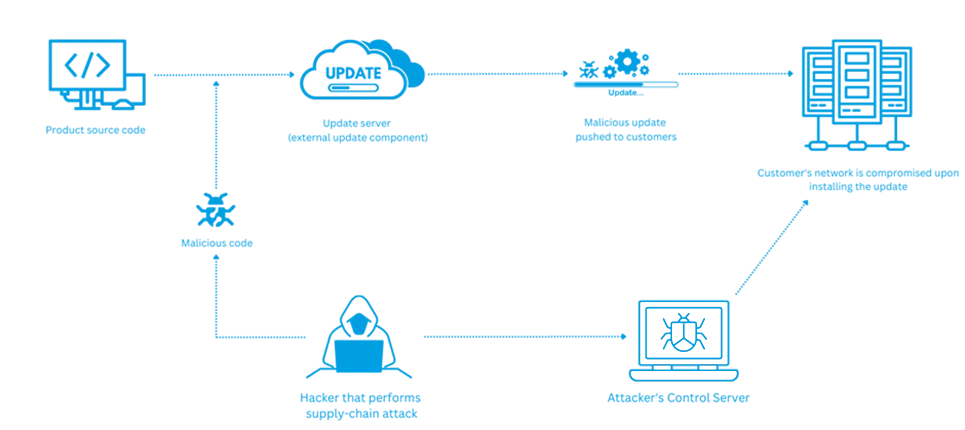
More and more, attackers are aiming at trusted vendors and service providers because a single breach can affect many organizations simultaneously. The transport and distribution industries are particularly vulnerable due to their dense networks of trust and relentless time pressures.
Improving cybersecurity requires implementing solid supplier governance, performing access audits, ensuring segmentation, and clarifying ownership of third-party integrations.
Effective supply chain security not only involves choosing reliable partners but also putting restrictions on the actions of any accounts that might be compromised.
The AI Factor in Logistics Cybersecurity
How Attackers Are Using AI
AI is improving upon traditional attacks rather than eliminating them. Now, threat actors can produce more persuasive phishing emails, translate scams into multiple languages, and fabricate realistic-looking documents, posing considerable risks in fast-moving communication sectors like transportation. This increase in AI-driven deception is affecting the transport industry just like others, leading to more fraud.
The NMFTA’s 2025 cybersecurity report highlights key concerns for fleets and transport operations, such as the rise of AI-enhanced phishing, cyber-enabled cargo theft, and threats to IoT-connected assets.
How Defenders Should Use AI
Defenders should certainly tap into AI, but they need to keep their expectations realistic. AI can contribute to anomaly detection, prioritize alerts, protect mailboxes, analyze behaviors, and speed up the triage process.
It can reveal patterns that might otherwise go unnoticed when teams are inundated with logs or mailbox activity. However, AI isn’t a complete solution by itself. It works best within a layered security framework that still incorporates secure settings, multi-factor authentication, backups, segmentation, and employee awareness training.
Cybersecurity in logistics improves when people, processes, and technology align; without discipline, advanced automation is merely noise on a fancier dashboard.
A Practical Defense Strategy for the Logistics Sector
Secure the Collaboration Layer First
For many logistics companies, the quickest entry point for attackers remains the collaboration layer, which includes Microsoft 365, email, shared documents, partner communication, and user identities. This highlights the importance of reinforcing this layer as a key cybersecurity best practice in logistics. Implement:
- Phishing resistant Multi Factor Authentication (MFA),
- privileged access controls,
- domain protection,
- secure email filtering, and
- strict governance of access rights.
Hornetsecurity’s Security Awareness Service is critical, as employees in operations, finance, dispatch, and customer service face constant pressure that attackers can use. Training enables them to recognize impersonation attempts, document fraud, suspicious links, and unusual requests, thereby preventing costly mistakes.
Protect the Continuity Layer
The key to cybersecurity for logistics businesses is to keep operations running smoothly. By using effective backup and recovery plans, having clear response procedures for incidents, and ensuring business continuity, a tough situation can be managed without turning into prolonged chaos. The main aim is not to prevent every problem but to recover quickly, restore important services, and limit any disruptions to operations.
Reduce Blind Spots Across IT, OT, and Partner Systems
Different teams handle warehouse technology, fleet systems, office applications, and supplier platforms. This is normal, but problems arise when there is no clear overview of these areas. To fix this, we can improve asset visibility, manage vendor risk, segment responsibilities, and set clear ownership.
A strong supply chain resilience strategy goes beyond a basic security program. It aligns cyber controls with operational needs. This strategy looks at critical systems, identities, and potential security issues to strengthen supply chain resilience, rather than just adding more tools.
How Hornetsecurity Helps Logistics Companies Strengthen Cyber Resilience
Hornetsecurity offers an all-in-one Microsoft 365 security (Governance, Risk, and Compliance) GRC and backup solution for your logistics business.

Our 365 Total Protection portfolio includes important tools for managing risks, ensuring compliance, and backing up data.
Plan 4 is especially good for businesses looking to improve their data protection. Use this opportunity to create a safer and more secure future for your organization.
Email, Identity, and Awareness
- Advanced Threat Protection (ATP) analyze potentially harmful attachments and links before they arrive in your inbox, enhancing overall security.
- DMARC and recipient validation reduce the likelihood of brand impersonation and delivery errors.
- 365 Total Backup lets you quickly recover mailboxes and files when needed.
Backup, Governance, and Recovery
Cybersecurity in logistics focus on building strong tools for everyday use. 365 Total Backup helps you recover quickly when needed and 365 Permission Manager controls access to reduce the risk of accidental data exposure.
Strengthen Logistics Cyber Resilience Before Disruption Spreads
By choosing Hornetsecurity, logistics organizations can strengthen:
- User awareness against phishing, impersonation, and document fraud
- Email and domain protection for supplier, customer, and internal communications
- Microsoft 365 governance, permission control, and tenant visibility
- Backup and recovery readiness for continuity when core systems are disrupted

Don’t wait for disruptions to hurt your supply chain. Strengthen your defenses today with Hornetsecurity’s Security Awareness Service. Teaching your staff about cyber threats and how to spot them can greatly lower the risk of human error.
Contact us now to ensure your logistics operations are protected from the digital threats of tomorrow.
Conclusion: Cyber Resilience Keeps Goods Moving
As logistics become more digital, cybersecurity becomes more important due to increasing risks of cyberattacks. Organizations should focus on key steps to protect themselves. They need to secure identities, protect communication channels, manage risks from third parties, train users, and develop a strong recovery plan. These cybersecurity steps can help keep logistics operations running smoothly.
FAQ
Why is cybersecurity important in the logistics sector?
It is very important to understand that the industry relies on connected systems and quick communication. A sudden attack can disrupt the movement of goods and the flow of information. This can cause delays, damage to shipments, and a loss of customer trust.
What are the top 3 cybersecurity threats faced by logistics companies?
1. Phishing
2. Business email compromise
3. Ransomware attacks
These threats take advantage of the industry’s need for quick communication and can cause major problems, such as delayed deliveries or incorrect information.
What steps can organizations take to enhance their resilience against cyber threats?
– Protect communication channels
– Prioritize securing identities
– Train users on cybersecurity awareness
– Manage risks from third parties
– Develop strong recovery plans
By following these steps, they can keep their operations running smoothly, even as cyberattacks become more common.